Data-Driven B2B Segmentation Road Map to Boost ROI and Conversions
Summarize with AI
|
Getting your Trinity Audio player ready...
|
The Segmentation Problem Nobody Talks About
Your CRM has 40,000 contacts. Your SDRs are working a sequence of 300 accounts. Your demand gen team just launched a campaign targeting “mid-market SaaS companies.”
Sound familiar? That’s not segmentation. That’s guessing with extra steps.
The companies dominating their categories in 2026 are not the ones with the biggest lists. They’re the ones with the sharpest signal on which accounts to prioritize, when to engage them, and what message lands for each segment.
This road map shows you how to build that.
What “Data-Driven Segmentation” Actually Means in 2026
Back in 2013, segmentation meant slicing a list by industry and company size. You’d drop contacts into three buckets, write three slightly different emails, and call it personalization.
That model is dead.
Modern B2B segmentation is a live system, not a static spreadsheet. It pulls from:
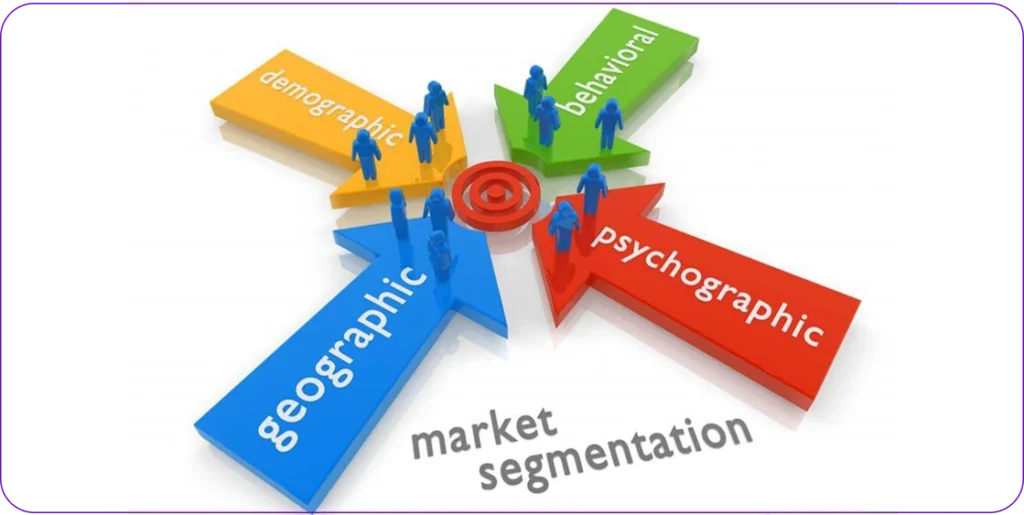
- Firmographic data (industry, headcount, revenue, tech stack)
- Behavioral data (site visits, content consumption, product usage signals)
- Intent data (third-party signals showing active in-market research)
- Technographic data (what tools they already use and what they’re replacing)
- Contextual signals (hiring patterns, funding rounds, leadership changes)
The output is not a list. It’s a dynamic model that continuously re-scores and re-prioritizes your addressable market based on who is most likely to buy, right now.
The 4-Layer B2B Segmentation Framework
Layer 1: Define Your ICP with Precision (Not Personality)
Most ICPs are aspirational fiction. “Series B SaaS companies with 50-200 employees targeting SMBs” is not a segment. It’s a guess dressed up as a framework.
A real ICP is built backwards from your best customers, and it contains:
- Firmographic floor: The minimum company profile where your solution creates genuine value (not just interest)
- Technographic indicators: What tools in their stack signal readiness or compatibility with yours
- Trigger events: The operational changes (new hire, funding, expansion, compliance requirement) that create urgency
- Negative ICP: Companies that look right on paper but churn within 6 months. This is where most teams leave money on the table.
Pro move: Pull your top 50 customers by LTV and bottom 50 by churn rate. Map the differences across those five data dimensions. Your real ICP lives in that gap.
Layer 2: Segment by Buying Behavior, Not Just Firmographics
The fatal flaw of firmographic-only segmentation: two companies can look identical on paper and be at completely different stages of your buying cycle.
A Director of Revenue Operations at a 300-person B2B SaaS company actively researching CRM integrations is a completely different buyer than a Director of Revenue Operations at a similar company who just renewed their stack for 3 years.
Same firmographic profile. Opposite buying readiness.
This is where behavioral and intent data layers transform your segmentation model:
| Signal Type | What It Tells You | Where to Get It |
|---|---|---|
| Website behavior | Active research phase, specific pain points | Your analytics + heatmaps |
| G2/Capterra reviews | Evaluating vendors, comparing alternatives | Review site intent feeds |
| LinkedIn activity | Hiring for roles that signal buying readiness | Sales intelligence tools |
| Job postings | Budget allocated, problem being prioritized | Job board scraping |
| Third-party intent | Consuming competitor content across the web | Bombora, TechTarget, G2 |
The key insight: Behavioral segmentation tells you when. Firmographic segmentation tells you who. You need both.
Layer 3: Build Micro-Segments for Message-Market Fit
One campaign does not fit all. This is where most B2B marketing teams lose their ROI.
Once you’ve layered firmographic and behavioral data, you should be working with 5-8 actionable micro-segments, not 3 broad buckets. Each micro-segment needs:
- A specific pain narrative (not “improve efficiency” but “your ops team is manually reconciling data across 4 tools every Monday morning”)
- A channel preference (enterprise champions are not engaging your cold emails; they respond to thought leadership and peer validation)
- A conversion goal (not all segments should go straight to demo some need a content offer first, others need a competitive comparison)
Example micro-segment breakdown for a revenue intelligence platform:
- Segment A: High-growth Series B SaaS, scaling SDR team, no current intent data provider. Pain: rep ramp time. Channel: LinkedIn + warm outbound.
- Segment B: Enterprise, existing Salesforce customer, recent RevOps hire. Pain: CRM data quality. Channel: account-based display + direct mail.
- Segment C: Mid-market, actively comparing vendors on G2. Pain: attribution. Channel: review site retargeting + bottom-of-funnel content.
Three different messages. Three different channels. One product. That’s micro-segmentation working.
Layer 4: Score, Prioritize, and Activate
Segmentation without prioritization is just a taxonomy project. The final layer is turning your segments into a live scoring system that tells your GTM team where to spend their next hour.
A practical scoring model has two components:
Fit Score (static, firmographic): How well does this account match your ICP across firmographic and technographic signals? Score 1-100.
Intent Score (dynamic, behavioral): How active is this account right now across behavioral and third-party signals? Score 1-100.
Multiply them. Your highest-priority segment is the upper-right quadrant: high fit + high intent. These are your “strike now” accounts.
The lower-right quadrant (high intent, lower fit) tells you where your ICP model might be wrong. Pay attention here.
Key Takeaway: Don’t just build segments. Build a scoring model that automatically surfaces which segment a given account belongs to, and how urgently it should be worked.
The ROI Math: Why Segmentation Pays Off
This is where the “data-driven” argument becomes undeniable.
According to research from Demandbase and SiriusDecisions (now Forrester B2B), companies running account-based programs with layered segmentation see:
- 2-3x higher pipeline conversion rates compared to broad-based outbound
- 18-20% improvement in average deal size when messaging aligns to specific segment pain
- 30-40% reduction in CAC when SDR time is concentrated on high-fit, high-intent accounts
The math is not complicated: if your SDR team is working 300 undifferentiated accounts, and segmentation allows you to identify the top 60 that are both high-fit and actively in-market, your team’s effective capacity just quintupled.
That’s the ROI of segmentation. Not a bigger list. A smarter one.
Common Segmentation Mistakes (And How to Fix Them)
Mistake 1: Treating ICP as a one-time exercise Your ICP should be reviewed every quarter. Your market changes. Your product evolves. The customers you win today may look different from the ones you won 18 months ago.
Mistake 2: Segmenting contacts instead of accounts B2B buying is a team sport. You’re not selling to a VP of Sales. You’re selling to a buying committee. Segment at the account level, then map the relevant contacts within each account to the right personas.
Mistake 3: Building segments your systems can’t activate The most sophisticated segmentation model is worthless if it lives in a spreadsheet that your CRM, marketing automation, and sales engagement platforms can’t read. Build segments that map directly to your tech stack’s filtering and trigger logic.
Mistake 4: Ignoring the “almost churned” segment Your existing customer base is your most under-segmented asset. Companies that are under-utilizing your product, haven’t expanded in 12+ months, or match the profile of churned accounts need a proactive segment and a distinct motion.
Building Your Segmentation Tech Stack in 2026
You do not need every tool on this list. You need the right combination for your stage and motion.
For early-stage (Seed to Series A):
- CRM: HubSpot or Salesforce
- Enrichment: Apollo.io or Clay
- Intent: G2 Buyer Intent or basic Bombora
For growth-stage (Series B+):
- CRM: Salesforce
- Enrichment: ZoomInfo or Clearbit (now HubSpot-owned)
- Intent: Bombora + TechTarget
- ABM activation: Demandbase or 6sense
For enterprise:
- Full ABM platform (6sense or Demandbase)
- First-party data infrastructure (CDP layer)
- AI-assisted scoring (most ABM platforms now include this natively)
The trend accelerating in 2026: AI agents that continuously re-score your segment model in real time, without manual data pulls. If your current stack requires a human to refresh your ICP scoring every quarter, you’re already behind.
Your 90-Day Segmentation Road Map
Month 1: Audit and Define
- Pull your top 50 customers by LTV. Map firmographic, technographic, and trigger-event patterns.
- Define your negative ICP. Document the profile of your 20 worst-fit customers.
- Identify data gaps. Where are you missing enrichment? Where is your intent data weak?
Month 2: Build and Score
- Build your fit scoring model in your CRM (start with 5-7 variables).
- Activate at least one intent data source. Layer it onto your fit model.
- Define 5-8 micro-segments with distinct pain narratives and channel strategies.
Month 3: Activate and Measure
- Run parallel campaigns: one with segmentation applied, one without (your control group).
- Measure: pipeline conversion rate, average deal size, and time to close by segment.
- Review and adjust. Segmentation is a system, not a project. It gets better with iteration.
The Bottom Line
B2B segmentation in 2026 is not about sorting a list. It’s about building an intelligence layer that tells your entire GTM team where the highest-probability revenue is, right now, and what to say when they get there.
The companies winning deals are not the ones with the biggest outreach volume. They’re the ones who show up to the right accounts, at the right moment, with the message that speaks directly to that account’s specific pain.
That level of precision requires data. It requires a system. And it requires the discipline to stop treating all accounts the same.
Your market is not a monolith. Your segmentation model shouldn’t be either.
Table of Contents
Enjoying this article?
Ready to turn insights into pipeline?
LakeB2B helps you find, enrich, and connect with verified B2B contacts using accurate data, intent signals, and audience intelligence so your sales and marketing teams can reach the right decision-makers with confidence.