
Modern data architecture gives healthcare organizations a scalable, secure, and integrated foundation for managing massive volumes of patient and operational data. It improves clinical decision-making, enhances care outcomes, and enables real-time, data-driven operations.
Modern data architecture helps healthcare systems unify scattered data, run advanced analytics, automate processes using AI, ensure regulatory compliance, and deliver more accurate and personalized care. It replaces slow, siloed systems with real-time, cloud-ready, secure frameworks built for the future of healthcare.
Data management means collecting, storing, organizing, and protecting patient information so clinicians can access accurate and updated records anytime. Strong data management ensures reliability, security, and continuity of care.
Healthcare depends on accurate and accessible patient information. Without strong data management systems, clinicians cannot make informed decisions.
Reliable data management ensures:
Modern data architecture is an advanced framework designed to store, process, integrate, and analyze healthcare data at scale. Unlike older systems, it supports large volumes of structured and unstructured data, cloud environments, real-time analytics, and AI-driven insights.
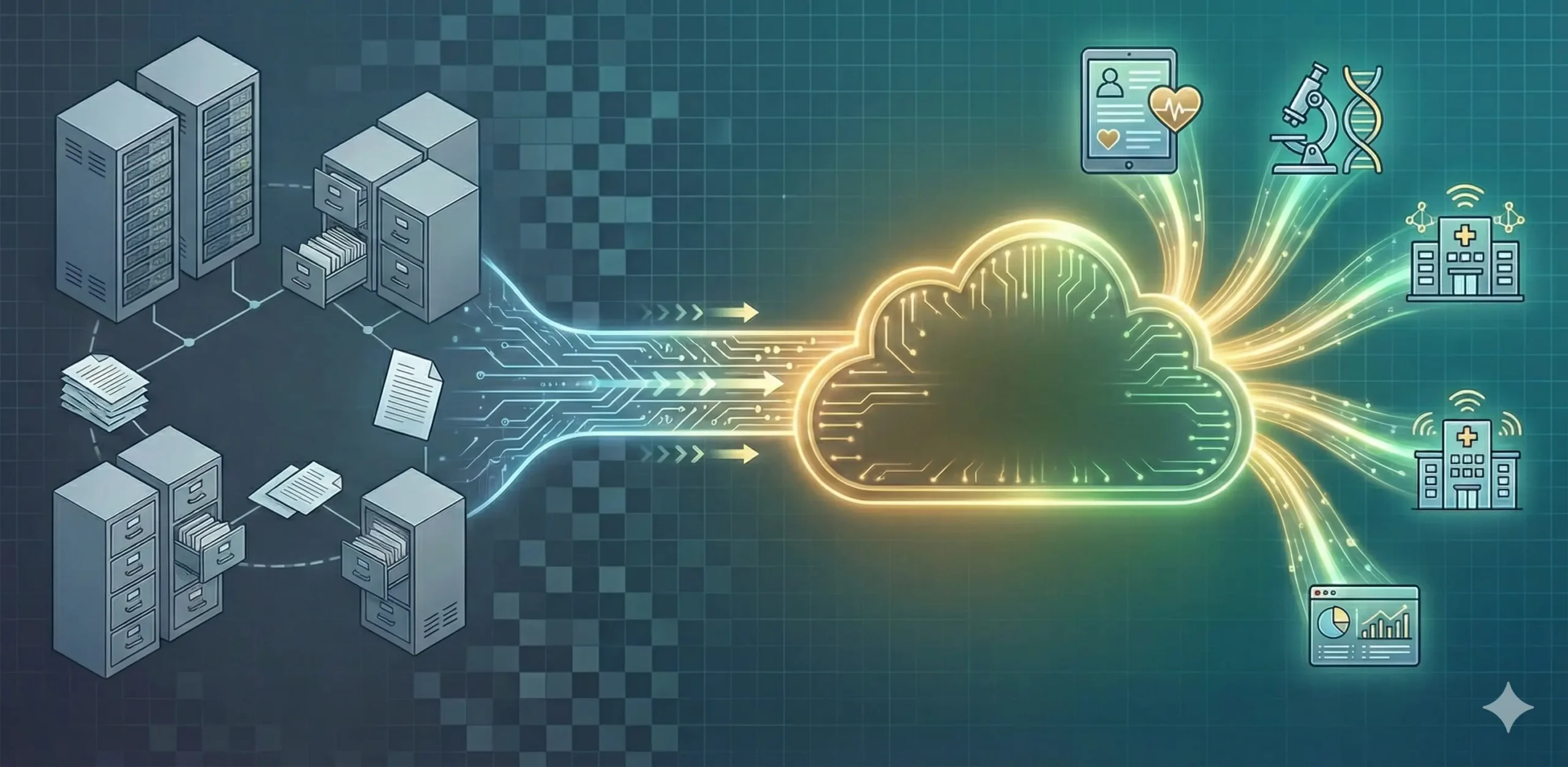
Modern healthcare systems must handle data from EHRs, data lakes, imaging devices, IoT wearables, lab systems, claims data, and more. This architecture allows all formats, from structured to unstructured, to flow into one ecosystem.
Modern architecture processes massive datasets quickly and efficiently.
It uses:
These systems handle growing healthcare data volumes without slowing down performance.
A single source of truth eliminates data silos. Centralized repositories bring together EHRs, images, patient records, and operational data, making information easy to access and share across teams.
Cloud platforms improve scalability, collaboration, and cost efficiency. Healthcare organizations can process large datasets, support remote care, and enhance disaster recovery through cloud-native solutions.
Patient data flows seamlessly between systems.
Interoperability connects labs, hospitals, pharmacies, specialists, and insurers, creating a unified patient view and supporting better coordinated care.
Modern architecture enables:
AI helps healthcare providers make faster and more accurate decisions while also enhancing marketing analytics and brand visibility.
Data protection sits at the core of modern architecture.
Healthcare organizations rely on:
This safeguards patient trust and ensures ethical data handling.
Real-time data helps clinicians act faster during emergencies and supports operational decisions such as bed availability, resource allocation, and patient monitoring.
Additional Read: Importance of Account-based Marketing in Healthcare Marketing
Unified and real-time data improves diagnostic accuracy and helps clinicians make confident decisions.
Predictive analytics prevents complications, supports early intervention, and enables personalized care plans.
Fewer data silos and more automation mean faster workflows, better resource use, and reduced manual tasks.
Integrated data makes it easier for hospitals, labs, specialists, and care teams to coordinate care.
Cloud and modular frameworks allow organizations to adapt quickly as technology evolves.
Large-scale analytics uncover trends, support clinical research, and speed up medical advancements.
Better storage, smarter resource allocation, and operational automation reduce long-term costs.
Additional Read: How to Build a High-Converting Landing Page for Healthcare Campaigns
Modern data architecture is no longer optional; it has become a strategic foundation for healthcare organizations seeking to deliver accurate, efficient, and personalized patient care. By integrating cloud technology, AI, interoperability, and secure data structures, healthcare systems can respond to fast-changing demands while improving outcomes and operational efficiency.
Want to modernize your healthcare data strategy? Contact our team to explore customized data architecture solutions tailored to your organization’s needs.
Achieve Greater Transparency and Enhanced Visibility in Reaching and Engaging with Ideal Customers
Submit the form below and our team will contact you.
 March 20, 2026 / 7 min read
By: Janet Borges
 January 08, 2026 / 5 min read
By: John Williams
 January 06, 2026 / 11 min read
By: Bryan Scott