How Intent Data Helps Healthcare Marketers Reach the Right Providers and Hospitals Faster

Summarize with AI
|
Getting your Trinity Audio player ready...
|
Healthcare marketers often misunderstand buyer intent, and it is a common problem in the medical sales sector.
Even if marketers and sales professionals know who their potential customers are, they fail to comprehend when those customers are actually interested in purchasing a product or service.
Moreover, the healthcare setting is complex and competitive, with numerous vendors constantly reaching out. This makes it extra difficult for marketers to stand out in this ecosystem. So, without understanding buyer intent, businesses are under constant pressure to deliver measurable marketing results.
To show some kind of results, many campaigns are launched targeting the buyers at the wrong time. Large lists are purchased, emails are sent in bulk, and ads are displayed to a wide audience. This approach increases reach but rarely improves conversions. The result is wasted spending, low engagement, and long sales cycles.
This is why healthcare intent data changes the approach by helping marketers understand which medical facilities or professionals are actively researching solutions and are more likely to engage.
What Is Healthcare Intent Data?
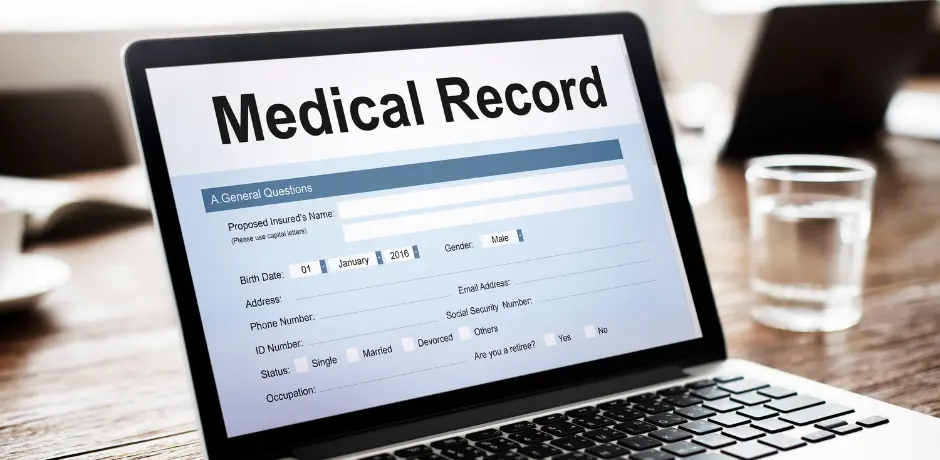
Healthcare intent data are the behavioral signals that indicate when hospitals, clinics, or healthcare professionals are actively looking for products or services relevant to their business.
These signals may include content consumption, topic searches, website visits, or engagement with or through industry platforms.
Here, instead of guessing who might be interested in your solutions, marketers can focus on prospects who are already in the research phase. This makes outreach more timely and relevant.
Nearly 70% of the healthcare buying journey is completed before a vendor is ever contacted—meaning intent signals often appear long before sales outreach begins.
How Is Intent Data Collected and Used?
Let’s get one thing straight! Intent data does not focus on personal medical information. Instead, it tracks professional research behavior linked to business decisions and purchases.
Marketing platforms analyze these signals and identify patterns. When activity around certain topics increases, the account is flagged as showing intent. A reputable B2B data provider gathers healthcare intent data by tracking:
- Healthcare organizations researching specific solutions
- Increased interest in particular healthcare topics
- Downloads of industry reports or white papers
- Repeated visits from the same organization to related content.
Why traditional healthcare B2B data is not enough
If marketers and businesses assume that in 2026, data without market insights will help them generate healthcare marketing leads, then failure is just a few steps away.
Most healthcare B2B data providers offer valuable information like hospital names, departments, decision-makers, and contact details. This helps marketers build lists and identify potential buyers.
However, traditional data does not indicate readiness. A hospital may fit the ideal customer profile but may not be planning a purchase for another year. Outreach at this stage often leads to low response rates.
Intent data adds a layer of intelligence by showing which accounts are moving from awareness to consideration. When healthcare B2B data is combined with intent signals, marketers can focus on accounts that match both profile and timing.
Why Intent Data is Necessary for Healthcare Marketers
1. Targeting high-value hospitals and providers more effectively
Intent data helps marketers identify high-value accounts that are actively exploring solutions. Instead of treating all accounts equally, marketing teams can prioritize hospitals showing strong research activity
This approach improves efficiency. Sales teams spend more time speaking with organizations that are already evaluating solutions. Marketing campaigns become more focused and relevant.
Hospital marketing leads generated through intent-based targeting tend to show higher engagement because outreach aligns with existing interest.
2. Reducing wasted marketing spend
Broad campaigns often consume budgets without delivering meaningful results. Ads are shown to audiences who may not have immediate needs. Email campaigns reach contacts who are not involved in decision-making.
Intent data reduces this waste by narrowing the audience to those demonstrating interest. Marketing messages reach accounts that are already researching related topics.
3. Improving physician outreach through relevance
The schedules of physicians are demanding. No marketer can get a special pass for product promotions.
This is why physician outreach solutions supported by intent data allow marketers to approach physicians when their interest is already established. If a group of physicians is researching a specific treatment technology or workflow improvement, outreach can be aligned with that interest. This makes communication more relevant and less intrusive.
Personalization without increasing complexity
Healthcare buyers expect communication that reflects their specific needs. Generic messaging rarely works in a specialized industry. Intent data helps marketers understand which topics matter to each account.
If a hospital is researching telehealth adoption, messaging can focus on implementation benefits and operational outcomes. If another hospital is focused on compliance or data security, communication can be adjusted accordingly.
This level of personalization improves engagement without requiring entirely separate campaigns for every account.
Faster outreach and shorter decision cycles
Healthcare marketing is all about timing. Reach prospects too early; they may not even require your solutions. Reach them late; the competitor would have already taken your lead.
Identifying the research phase or the top of the funnel phase is crucial for healthcare marketing lead generation. Engagement at the right moment is only possible through healthcare B2B data with proper intent signals.
Best practices for using healthcare intent data effectively
To get the most value from intent-driven strategies, healthcare marketers should follow a few practical steps:
- Define ideal hospital and provider profiles before launching campaigns
- Combine intent data with verified healthcare databases
- Align marketing and sales teams around shared targeting criteria
- Use intent signals to personalize messaging rather than increase volume
- Continuously monitor engagement and adjust targeting
Conclusion
Healthcare marketing in 2026 cannot depend on broader, scattered outreach. Just by gaining basic healthcare B2B data, marketers are not going to find customers and sell products.
Healthcare intent data is paramount not just to know who to target, but when to engage. By identifying hospitals and physicians actively researching solutions, marketers can focus on high-value accounts, reduce wasted spending, and improve physician outreach effectiveness.
As competition increases across healthcare markets, intent-driven strategies provide a practical way to reach the right providers and hospitals faster while improving overall marketing ROI.
Enjoying this article?
Ready to turn insights into pipeline?
LakeB2B helps you find, enrich, and connect with verified B2B contacts using accurate data, intent signals, and audience intelligence so your sales and marketing teams can reach the right decision-makers with confidence.