Unlocking Sales Intelligence Data: Strategies for Better Decision Making in B2B

Summarize with AI
|
Getting your Trinity Audio player ready...
|
In the modern business landscape, data has become a strategic asset, especially for B2B organizations that are looking to gain a competitive edge. Sales intelligence data, referring to information collected about prospects, customers, and market trends has emerged as a key tool in making smarter, data-driven decisions.
Sales intelligence provides businesses with valuable insights that can help sales and marketing teams tailor their approaches, engage better with customers, and ultimately improve conversion rates. However, many businesses are still not fully utilizing sales intelligence to its potential. The challenge lies in effectively unlocking and leveraging this data to make informed, strategic decisions.
In this blog, we’ll explore the concept of sales intelligence data, how it matters for B2B decision-making, and the strategies you can use to unlock its full potential to drive better results across your organization.
What is Sales Intelligence Data?
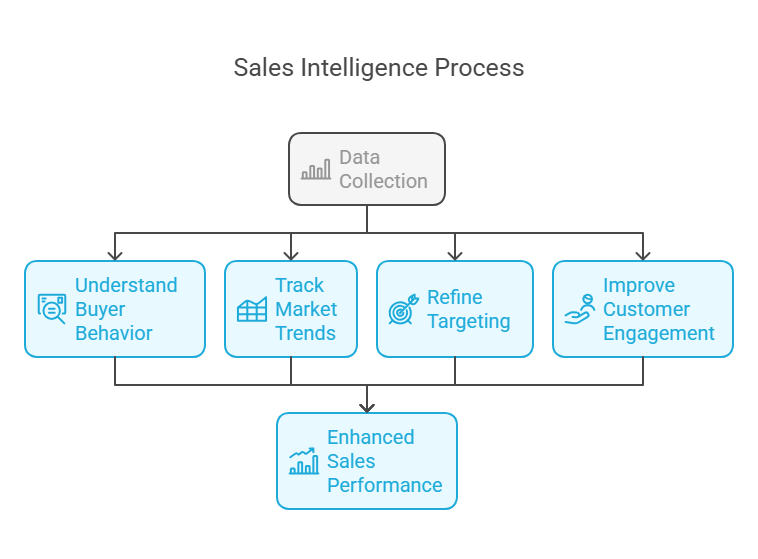
Sales intelligence refers to the use of data to enhance sales performance. It includes information about prospects, customers, and competitors that can inform decision-making in the sales process. The data can come from various sources, including CRM systems, social media platforms, web and sales analytics tools, third-party data providers, and internal interactions with customers.
Sales intelligence data can be used to:
- Understand buyer behavior: By analyzing purchase patterns and interactions, businesses can predict customer needs and future buying behavior.
- Track market trends: Monitor shifts in industry trends, competitor strategies, and market demands.
- Refine targeting: Gain insights into the right prospects who are most likely to convert, making marketing and sales efforts more efficient.
- Improve customer engagement: Use insights into customer preferences and pain points to deliver more personalized interactions and better service.
Why Sales Intelligence is Crucial for B2B Businesses
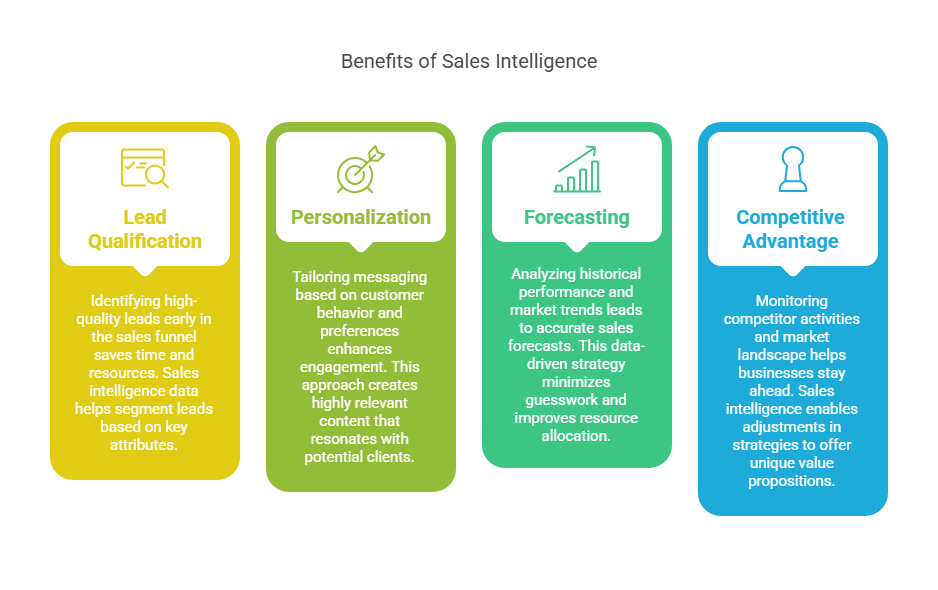
In the highly competitive world of B2B sales, gaining the right insights into customers and prospects can significantly impact a company’s growth trajectory. Here are some reasons why sales intelligence data is critical:
- Enhanced Lead Qualification
In B2B sales, identifying high-quality leads early in the sales funnel is essential to save time and resources. Sales intelligence data allows businesses to segment leads based on key attributes such as budget, industry, size, and intent. With these insights, sales teams can focus on leads with the highest potential, resulting in better conversion rates.
- Improved Personalization
Sales intelligence helps businesses tailor their messaging based on deep insights into each customer’s behavior and preferences. This personalization goes beyond simple name recognition; it enables businesses to craft highly relevant content and offers that resonate with potential clients. When prospects feel understood, they are more likely to engage and convert.
- Better Forecasting and Planning
Sales intelligence data allows organizations to analyze historical performance, buyer behavior, and market trends. By doing so, businesses can make more accurate sales forecasts and establish more realistic goals. This data-driven approach minimizes guesswork, enabling teams to plan and allocate resources more effectively.
- Competitive Advantage
In B2B Leads, being aware of what your competitors are doing and understanding the broader market landscape is critical for staying ahead. Sales intelligence allows businesses to monitor competitor activities, sales pipeline optimization, pricing strategies, and customer sentiments. Armed with this information, businesses can adjust their sales strategies accordingly and offer unique value propositions to potential clients.
Strategies to Unlock Sales Intelligence Data for Better Decision-Making
Now that we understand the importance of sales intelligence data, let’s dive into the strategies that B2B companies can implement to unlock its potential and drive better decision-making.
- Integrate Your Data Sources
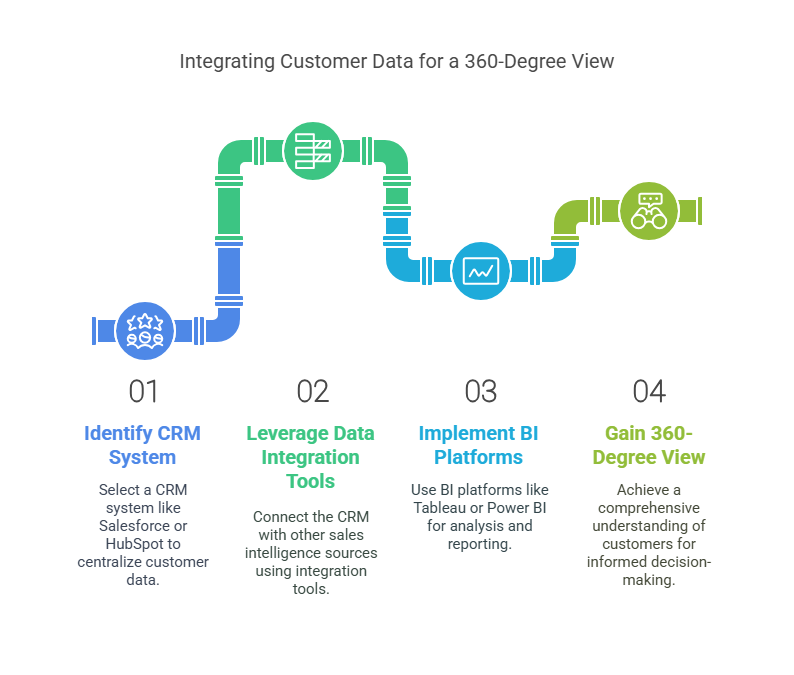
One of the key challenges in leveraging sales intelligence is siloed data. Information might exist in different systems, from CRM platforms to social media dashboards, website analytics tools, and external data providers. To make informed decisions, it’s crucial to integrate these disparate data sources into a unified platform.
How to Implement:
- Use a CRM system that centralizes customer data, such as Salesforce or HubSpot, which can aggregate insights from marketing campaigns, sales interactions, and customer service records.
- Leverage data integration tools to connect your CRM with other sources of sales intelligence, including social media, email marketing platforms, and external data providers.
- Implement data warehouses or business intelligence (BI) platforms like Tableau or Power BI to provide a central hub for all your data, enabling easier analysis and reporting.
By integrating your data, you can gain a 360-degree view of your leads, prospects, and customers, enabling more informed decisions.
- Leverage Predictive Analytics
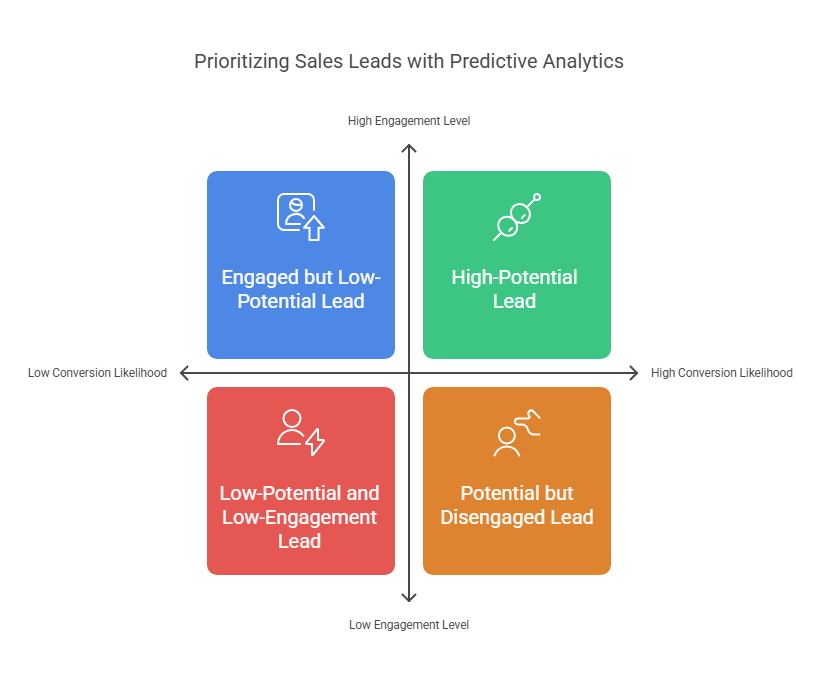
Predictive analytics uses historical data to predict future trends and behaviors. By utilizing machine learning algorithms and statistical models, businesses can forecast future customer behavior using sales forecasting methods, identify high-potential leads, and predict sales outcomes with greater accuracy.
How to Implement:
- Integrate predictive analytics tools into your CRM and sales processes. Platforms like InsideSales, Clari, or HubSpot offer built-in predictive analytics that can help you assess the likelihood of closing deals and identify upsell opportunities.
- Use lead scoring techniques to prioritize prospects based on their likelihood to convert. Combine demographic data with behavioral data (e.g., website visits, email opens, or social media engagement) to assign a score to each lead, helping your sales team focus their efforts where it matters most.
Predictive analytics can help you anticipate customer needs, optimize sales strategies, and increase win rates.
- Implement Data-Driven Sales Playbooks
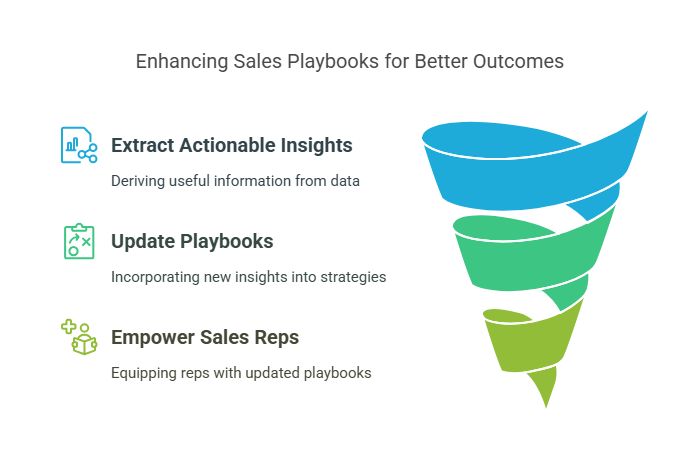
Sales playbooks are critical for guiding sales reps through the decision-making process at each stage of the sales cycle. By incorporating sales intelligence data into your playbook, you can ensure that reps are using the most up-to-date, relevant insights during each interaction with a prospect.
How to Implement:
- Use AI-powered tools (Ex: Chorus.ai) to analyze sales conversations and provide actionable insights. These tools can highlight which messaging resonates with prospects and which tactics lead to better outcomes.
- Update playbooks regularly based on new insights gained from customer interactions, competitor activities, and industry trends. Ensure that your sales team has easy access to these playbooks in your CRM or sales engagement platform.
By continuously improving your sales playbooks, you empower your sales reps to make smarter decisions, increasing the efficiency and effectiveness of their outreach.
- Monitor Real-Time Market Trends
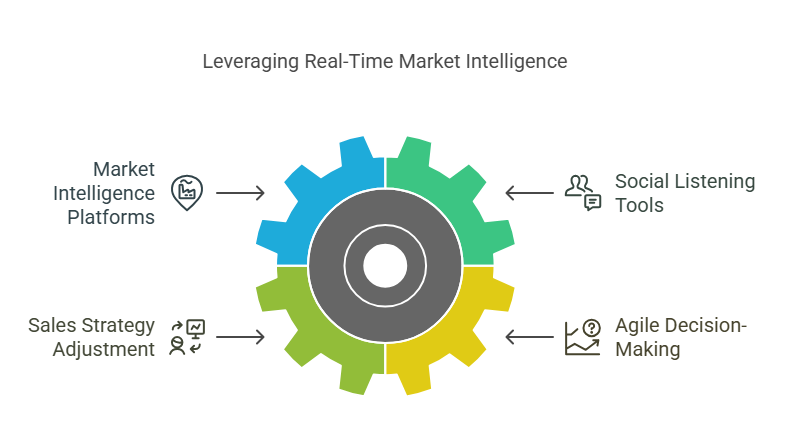
Real-time market intelligence is crucial for staying ahead of the curve. It allows businesses to identify emerging trends, shifts in customer preferences, and competitor moves that can impact sales strategies. B2B Sales intelligence tools like LinkedIn Sales Navigator, or Clearbit provide up-to-the-minute data about prospects, companies, and industries.
How to Implement:
- Use market intelligence platforms to monitor industry news, competitor movements, and market shifts that might influence buyer behavior. By receiving real-time updates, you can adjust your sales and marketing strategies promptly.
- Incorporate social listening tools like Brandwatch or Sprout Social to track conversations around your industry and competitors on social media platforms. These insights can inform your content strategy and customer outreach.
By leveraging real-time market intelligence, businesses can make quicker decisions and respond to changes in the market with agility.
- Focus on Customer Feedback and Sentiment Analysis
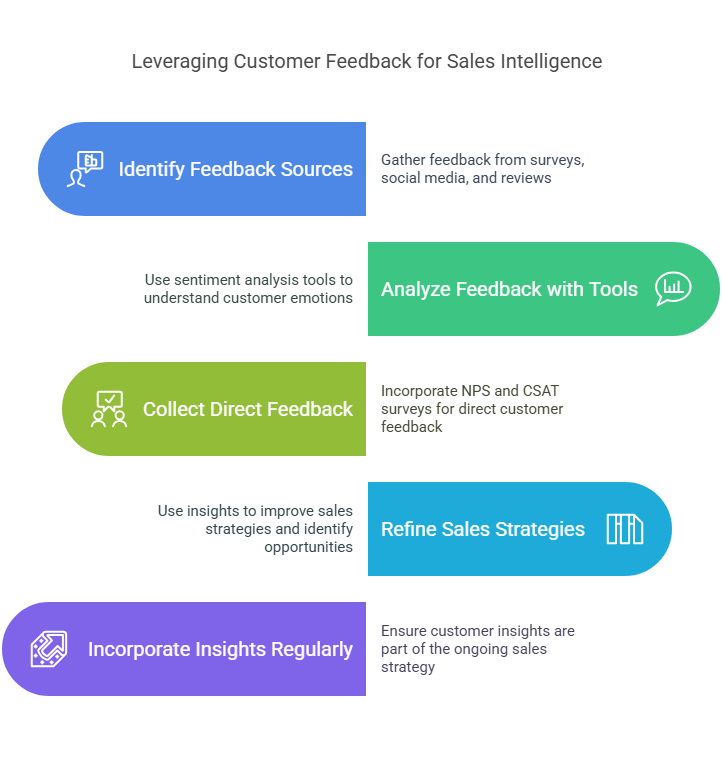
Customer feedback is a valuable source of sales intelligence data. By analyzing feedback, surveys, and reviews, businesses can uncover insights about customer satisfaction, pain points, and future needs. This data can be used to improve your product offerings, refine your messaging, and enhance customer relationships.
How to Implement:
- Use sentiment analysis tools like MonkeyLearn or Lexalytics to analyze customer feedback from surveys, social media, and reviews. These tools can help you identify customer emotions and perceptions of your brand.
- Incorporate NPS surveys (Net Promoter Score) and CSAT surveys (Customer Satisfaction Score) to collect direct feedback from customers, which can be used to refine sales strategies and identify opportunities for upselling or cross-selling.
Customer insights should be regularly incorporated into your sales strategy, enabling you to meet customer needs more effectively and increase retention.
Conclusion
Sales intelligence data is no longer a luxury; it’s a necessity for B2B businesses striving to make better, data-driven decisions. By integrating data from various sources, leveraging predictive analytics, monitoring market trends, and focusing on customer feedback, businesses can unlock the full potential of their sales intelligence data.
These strategies not only improve decision-making but also lead to more effective sales processes, better engagement with prospects, and higher conversion rates. As B2B sales continue to evolve, those who embrace sales intelligence will remain at the forefront, while those who ignore it risk falling behind.
By unlocking and utilizing sales intelligence data, B2B companies can sharpen their competitive edge, anticipate customer needs, and drive business growth in an increasingly data-driven world.
Enjoying this article?
Ready to turn insights into pipeline?
LakeB2B helps you find, enrich, and connect with verified B2B contacts using accurate data, intent signals, and audience intelligence so your sales and marketing teams can reach the right decision-makers with confidence.