50 Top Fintech Companies Transforming Digital Finance in 2026
Summarize with AI
|
Getting your Trinity Audio player ready...
|
From payments and digital banking to RegTech and blockchain, these are the companies redefining how money moves, who can access financial services, and how the businesses behind them operate.
Fintech has evolved far beyond its roots in digital payments. What started as a faster way to move money has grown into a broad ecosystem of platforms that power banking, lending, investing, insurance, compliance, and financial operations. Today, fintech companies sit at the center of how consumers access financial services and how businesses manage transactions, risk, and growth.
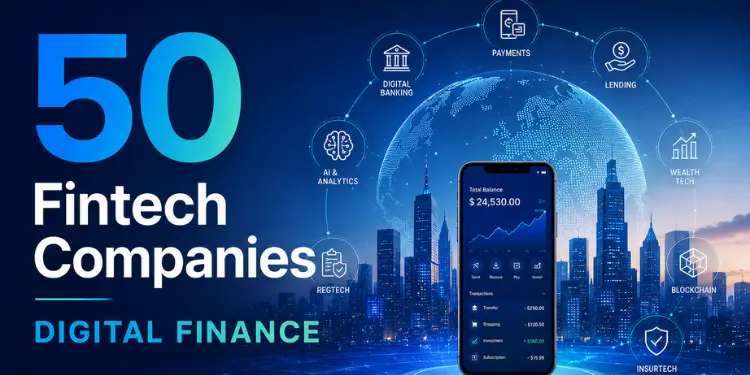
The industry now spans eight distinct segments, each defined by different business models, technologies, and market dynamics. Some companies focus on consumer experiences, while others provide the infrastructure, data, and networks that support thousands of financial institutions and businesses behind the scenes.
This list of fintech companies profiles 50 of the most influential financial technology companies, from category-defining giants to fast-rising fintech startups, organized by segment with a clear view of what each does, why it matters, and what sets it apart.
Top Fintech Companies at a Glance
A quick reference to some of the top fintech companies featured below, grouped by category and primary focus. The full profiles follow further down.
| Company | Category | Primary Focus |
| Stripe | Payments | Payment infrastructure |
| Adyen | Payments | Global enterprise payments |
| PayPal | Payments | Digital wallets and payments |
| Block | Payments | Merchant and consumer payments |
| Chime | Digital Banking | Consumer challenger banking |
| Revolut | Digital Banking | Financial super-app |
| Monzo | Digital Banking | Mobile-first banking |
| SoFi | Lending | Digital lending and banking |
| Affirm | Lending | Buy now, pay later |
| Upstart | Lending | AI-driven lending |
| Robinhood | WealthTech | Commission-free investing |
| Betterment | WealthTech | Robo-advisory |
| Wealthfront | WealthTech | Automated investing |
| Lemonade | InsurTech | AI-driven insurance |
| Root | InsurTech | Usage-based auto insurance |
| ComplyAdvantage | RegTech | AML and risk data |
| Alloy | RegTech | Identity and risk decisioning |
| Plaid | Financial Infrastructure | Financial connectivity |
| Galileo | Financial Infrastructure | Card issuing and processing |
| Fiserv | Financial Infrastructure | Banking and payments tech |
| Coinbase | Blockchain & Digital Assets | Crypto exchange |
| Circle | Blockchain & Digital Assets | Stablecoins (USDC) |
| Chainalysis | Blockchain & Digital Assets | Blockchain analytics |
| Plaid / Synctera | Financial Infrastructure | Embedded banking (BaaS) |
Key Fintech Categories Shaping Digital Finance
These eight segments define the modern fintech ecosystem, and each follows different buying logic and serves a different part of the financial stack:
- Payments – moving money between businesses and consumers, online and in person.
- Digital Banking – app-first current accounts and challenger banks.
- Lending – digital, AI-driven, and point-of-sale credit.
- WealthTech – investing, trading, and automated wealth management.
- InsurTech – technology-led, data-driven insurance.
- RegTech – identity, compliance, and financial-crime risk management.
- Financial Infrastructure – the APIs and platforms other fintech businesses build on.
- Blockchain & Digital Assets – crypto exchanges, custody, stablecoins, and analytics.
Together, these categories make up the list of fintech companies below. We start where fintech itself began, with payments.
Top Payment Fintech Companies
Payments is where most fintech innovation began, and it is still the segment with the deepest infrastructure. These companies move trillions of dollars in value and power the checkout experiences behind a huge share of online and in-person commerce. Top payment fintech companies in 2026 are:
1. Stripe
What it does: Provides payments infrastructure and APIs that let businesses accept and manage online payments.
Why it matters: It underpins a vast share of internet commerce, from startups to global enterprises.
Differentiator: Developer-first APIs and a broad platform spanning billing, marketplaces, and fraud.
2. Adyen
What it does: Operates a single global payments platform combining gateway, acquiring, and risk in one system.
Why it matters: It powers payments for many of the world’s largest merchants across channels.
Differentiator: A unified, in-house-built stack rather than a patchwork of acquired tools.
3. PayPal
What it does: Runs one of the largest digital wallet and online payment networks, including Braintree and Venmo.
Why it matters: Decades of consumer trust and a two-sided network of shoppers and merchants.
Differentiator: Brand recognition plus a built-in consumer base few rivals can match.
4. Block
What it does: Combines Square for sellers and Cash App for consumers across one ecosystem.
Why it matters: It bridges small-business payments and consumer finance at scale.
Differentiator: An integrated merchant-and-consumer ecosystem under one roof.
5. Checkout.com
What it does: Delivers enterprise-grade payment processing for large, global merchants.
Why it matters: High-performance processing for businesses operating across many markets.
Differentiator: Flexible, data-rich processing tuned for complex enterprise needs.
6. Worldpay
What it does: Provides large-scale merchant acquiring and payment processing worldwide.
Why it matters: One of the highest-volume processors serving enterprise and omnichannel merchants.
Differentiator: Scale and breadth across in-store, online, and global payment methods.
7. Marqeta
What it does: Offers a modern card-issuing platform delivered through APIs.
Why it matters: It powers the card programs behind many fintech and commerce brands.
Differentiator: Developer-friendly issuer processing that makes launching cards fast.
Top Digital Banking Companies
Digital banks rebuilt the current account for the smartphone, stripping out branches and fees while adding budgeting, instant notifications, and slick onboarding. The strongest players are now expanding into lending, investing, and infrastructure. Top companies include:
8. Chime
What it does: Offers fee-free mobile banking in the US through partner banks.
Why it matters: One of the largest US challenger banks by customer reach.
Differentiator: Fee-free model with features like early access to direct deposits.
9. Revolut
What it does: Runs a global financial super-app spanning banking, FX, crypto, and travel.
Why it matters: Tens of millions of users across multiple markets and products.
Differentiator: A single app bundling far more financial services than a typical bank.
10. N26
What it does: Provides mobile-first banking across Europe under a full banking license.
Why it matters: An early European neobank that helped define the category.
Differentiator: Clean, app-native banking backed by its own banking license.
11. Monzo
What it does: Operates a leading UK challenger bank known for budgeting tools.
Why it matters: A standout in the UK market with a highly engaged user base.
Differentiator: Community-driven product development and intuitive money management.
12. Starling Bank
What it does: Runs a profitable UK digital bank and licenses its technology to others.
Why it matters: Proof that a challenger bank can be both profitable and a tech vendor.
Differentiator: Owns its banking stack and sells it as a platform through Engine.
13. Current
What it does: Provides accessible US mobile banking aimed at younger customers.
Why it matters: Brings modern banking to segments traditional banks underserve.
Differentiator: Rewards, faster pay access, and features built for younger users.
Top Lending Fintech Companies
Lending fintechs replaced paperwork and rigid credit scores with instant decisions and alternative data. From point-of-sale installments to AI underwriting, they have reshaped how consumers and small businesses access credit.
14. SoFi
What it does: Offers digital lending alongside a full suite of consumer financial services.
Why it matters: A one-stop financial platform that also owns key infrastructure.
Differentiator: Member ecosystem plus ownership of the rails behind many fintechs.
15. Affirm
What it does: Provides point-of-sale installment lending (buy now, pay later).
Why it matters: A major force in transparent consumer financing at checkout.
Differentiator: No-late-fee installments integrated directly with merchants.
16. Upstart
What it does: Runs an AI lending platform that partners with banks and credit unions.
Why it matters: Expands access to credit using models that go beyond traditional scores.
Differentiator: Machine-learning underwriting that reprices risk more granularly.
17. LendingClub
What it does: Operates digital consumer lending and online banking.
Why it matters: A pioneer of marketplace lending that became a chartered bank.
Differentiator: Combines digital origination with a banking license.
18. Klarna
What it does: Provides buy now, pay later and a global shopping app.
Why it matters: One of the most recognized BNPL and shopping brands worldwide.
Differentiator: A shopping ecosystem wrapped around flexible payments.
19. Funding Circle
What it does: Runs a lending marketplace focused on small and medium businesses.
Why it matters: Channels capital to SMEs often overlooked by traditional banks.
Differentiator: Purpose-built for small-business lending at scale.
Top WealthTech Companies
WealthTech opened investing to everyone, from commission-free trading to automated portfolios and micro-investing. These companies turned wealth management from an advisor-gated service into an app on your phone. Top WealthTech companies include:
20. Robinhood
What it does: Offers commission-free trading of stocks, options, and crypto.
Why it matters: It pushed the whole industry toward zero-commission retail investing.
Differentiator: Mobile-first experience that brought a new generation into markets.
21. Betterment
What it does: Provides automated, goal-based investing as a robo-advisor.
Why it matters: A pioneer that helped mainstream algorithmic portfolio management.
Differentiator: Hands-off, automated investing built around personal goals.
22. Wealthfront
What it does: Delivers automated investing and high-yield cash management.
Why it matters: Makes sophisticated planning accessible without a human advisor.
Differentiator: Software-driven financial planning and tax-aware automation.
23. eToro
What it does: Runs a social, multi-asset trading platform.
Why it matters: Combines investing with a global social network of traders.
Differentiator: Copy-trading that lets users mirror experienced investors.
24. Acorns
What it does: Offers micro-investing by rounding up everyday purchases.
Why it matters: Lowers the barrier to investing for first-time savers.
Differentiator: Automatic round-ups that turn spare change into portfolios.
25. Public
What it does: Provides an investing app spanning stocks, crypto, and alternative assets.
Why it matters: Appeals to retail investors who value transparency and community.
Differentiator: A social, transparency-focused approach to retail investing.
Top InsurTech Companies
InsurTech rebuilt insurance around data and instant digital experiences, replacing slow paperwork with apps, behavioral pricing, and AI-driven claims. These companies challenge incumbents on speed, price, and customer experience:
26. Lemonade
What it does: Provides AI-driven insurance across renters, home, pet, life, and car.
Why it matters: A digital-native insurer that reimagined a slow, paper-heavy industry.
Differentiator: AI-powered onboarding and near-instant claims handling.
27. Root
What it does: Offers car insurance priced on actual driving behavior.
Why it matters: Shows how telematics can make pricing fairer and more personal.
Differentiator: Usage-based pricing driven by smartphone telematics.
28. Hippo
What it does: Delivers modern home insurance with a focus on prevention.
Why it matters: Shifts home insurance from reactive payouts to proactive protection.
Differentiator: Smart-home integration and proactive risk reduction.
29. Next Insurance
What it does: Provides fully digital insurance tailored to small businesses.
Why it matters: Serves SMBs that traditional insurers find hard to underwrite.
Differentiator: Tailored, instant small-business policies bought entirely online.
30. Kin
What it does: Offers direct-to-consumer home insurance in catastrophe-prone regions.
Why it matters: Provides coverage in markets many insurers are retreating from.
Differentiator: Data-driven underwriting built for high-risk geographies.
Top RegTech Companies
RegTech keeps the rest of fintech legal and safe, handling identity verification, anti-money-laundering screening, fraud detection, and risk decisioning. As regulators tighten scrutiny, these platforms have become mission-critical infrastructure. Top companies include:
31. ComplyAdvantage
What it does: Provides AI-driven AML and financial-crime risk data.
Why it matters: Helps firms screen customers and transactions against evolving risk.
Differentiator: A real-time, AI-maintained financial-crime risk database.
32. Alloy
What it does: Offers an identity and risk decisioning platform for onboarding.
Why it matters: Lets banks and fintechs orchestrate KYC and fraud checks in one place.
Differentiator: A single API connecting many data sources with configurable decisioning.
33. Trulioo
What it does: Delivers global identity and business verification.
Why it matters: Enables compliant onboarding across borders and jurisdictions.
Differentiator: Worldwide coverage of identity and KYB data.
34. Onfido
What it does: Provides identity verification using documents and biometrics.
Why it matters: A widely used layer for digital onboarding and fraud prevention.
Differentiator: AI-based document and biometric verification at scale.
35. Sardine
What it does: Runs a fraud, compliance, and AML platform for fintechs and crypto firms.
Why it matters: Unifies fraud prevention and compliance across the customer journey.
Differentiator: Device intelligence and behavioral risk scoring from onboarding to payments.
Top Financial Infrastructure Companies
Financial infrastructure is the plumbing of fintech: the APIs, core systems, and banking-as-a-service platforms that let everyone else build. These companies rarely face consumers, but thousands of products depend on them:
36. Plaid
What it does: Connects apps and services to users’ bank accounts and financial data.
Why it matters: A foundational data network that much of consumer fintech relies on.
Differentiator: Broad bank coverage exposed through clean, developer-friendly APIs.
37. Galileo
What it does: Provides payment processing and card-issuing infrastructure via APIs.
Why it matters: Powers the card and banking programs of many fintech brands.
Differentiator: Bank-grade processing delivered as flexible developer APIs.
38. Finastra
What it does: Supplies enterprise banking software across core, lending, and payments.
Why it matters: Serves thousands of financial institutions globally.
Differentiator: A broad open-finance platform connecting banks and developers.
39. Fiserv
What it does: Delivers payments and core banking technology at a massive scale.
Why it matters: Backbone technology for banks and merchants alike, including Clover.
Differentiator: Scale spanning both core banking and merchant point-of-sale.
40. Jack Henry
What it does: Provides core banking technology for community and regional institutions.
Why it matters: Keeps smaller US banks and credit unions competitive.
Differentiator: Focus on community institutions with an increasingly open platform.
41. Treasury Prime
What it does: Offers banking-as-a-service that connects fintechs with banks.
Why it matters: Enables companies to embed banking products without becoming a bank.
Differentiator: A bank-direct network model for embedded banking.
42. Synctera
What it does: Runs a banking-as-a-service platform linking fintechs and community banks.
Why it matters: Brings sponsor banks and compliance together for embedded finance.
Differentiator: End-to-end BaaS with built-in compliance and bank matchmaking.
Top Blockchain and Digital Asset Companies
Blockchain and digital-asset companies are building the regulated, institutional-grade layer of crypto: exchanges, custody, stablecoins, analytics, and developer infrastructure. They are where traditional finance and digital assets increasingly meet. The top companies in this category are:
43. Coinbase
What it does: Operates a leading regulated crypto exchange and broader ecosystem.
Why it matters: A primary on-ramp to digital assets for US consumers and institutions.
Differentiator: Compliance-first posture plus its own ecosystem and infrastructure.
44. Fireblocks
What it does: Provides institutional-grade digital-asset custody and security.
Why it matters: Secures the operations of banks, exchanges, and crypto businesses.
Differentiator: MPC-based wallet security and a broad asset transfer network.
45. Circle
What it does: Issues the USDC stablecoin and related payment infrastructure.
Why it matters: A major regulated stablecoin underpinning digital-dollar payments.
Differentiator: Reserve-backed, compliance-focused stablecoin issuance.
46. Chainalysis
What it does: Delivers blockchain analytics, compliance, and investigations.
Why it matters: The standard tooling for crypto compliance and on-chain forensics.
Differentiator: On-chain data and investigation tools used by firms and governments.
47. Anchorage Digital
What it does: Provides regulated, institutional crypto custody.
Why it matters: Brings bank-grade custody to institutions entering digital assets.
Differentiator: Operates under a US federal trust charter.
48. Ripple
What it does: Builds blockchain-based cross-border payment and custody solutions.
Why it matters: Targets the slow, costly world of international settlement.
Differentiator: Enterprise payments plus a growing institutional custody offering.
49. Consensys
What it does: Develops core Ethereum software, including MetaMask and Infura.
Why it matters: Foundational infrastructure for much of the Ethereum ecosystem.
Differentiator: A developer and wallet stack at the center of Web3.
50. Kraken
What it does: Runs a long-standing global crypto exchange known for security.
Why it matters: A trusted venue for trading and staking a wide range of assets.
Differentiator: A security-first reputation across a broad asset range.
Key Takeaways from the Fintech Landscape in 2026
Looking across the top companies, a few structural patterns define how the fintech landscape is evolving:
- Payments remains one of the largest fintech segments and forms the foundation for many other categories.
- Financial infrastructure companies increasingly power the broader fintech ecosystem, with thousands of products depending on a handful of providers.
- Embedded finance continues expanding beyond traditional fintech firms, turning software businesses into financial technology companies.
- RegTech has shifted from an optional add-on to a core requirement as compliance scrutiny intensifies.
- Digital asset companies are moving steadily toward institutional adoption, custody, and regulated stablecoins.
- AI now runs through every segment, from lending and insurance underwriting to fraud detection and customer support.
- The most influential fintech businesses are often platforms, not apps, the rails that let other companies build and scale.
Why Fintech Companies Are a Valuable Market for B2B Vendors
Fintech companies are strong buyers of B2B tools because their products run on regulated financial systems. From payments and lending to compliance and customer experience, most fintech businesses rely on external technology to operate and scale.
This creates ongoing demand across areas like compliance, security, infrastructure, data, analytics, and customer engagement. These needs are not one-time purchases but part of how fintech companies continuously build and maintain their products.
For vendors, the challenge is less about finding fintech companies and more about understanding which ones matter, how they are structured, and who the key decision-makers are. The market is spread across different segments and stages, which makes targeting difficult without a clear view.
A well-curated fintech companies list helps turn this complexity into a clear set of target accounts organized by segment, stage, and function.
Trends Shaping the Fintech Industry in 2026
The fintech landscape in 2026 is being shaped by a set of forward-looking structural shifts:
Embedded Finance Expansion
Non-financial companies increasingly offer banking, payments, and lending inside their own products, turning every software business into a potential fintech.
AI-Powered Financial Services
Machine learning now drives underwriting, fraud detection, personalization, and customer support across the sector.
Real-Time Payments
Instant settlement is becoming the default expectation, pushing both banks and infrastructure providers to modernize.
Open Banking Adoption
Standardized data sharing is unlocking new products built on consented access to bank accounts.
Regulatory Technology Growth
As scrutiny intensifies, demand for identity, AML, and risk tooling keeps rising.
Financial Infrastructure Modernization
Banks are replacing legacy cores with API-first platforms to keep pace with digital challengers.
Digital Identity and Fraud Prevention
Verifying who is on the other end of a transaction has become a central battleground.
Stablecoins and Digital Assets
Regulated stablecoins and institutional custody are pulling digital assets into mainstream finance.
Together, these trends highlight a clear direction for fintech in 2026: the industry is becoming more embedded, more real-time, and increasingly built on shared infrastructure rather than standalone financial products.
FAQs
What are the largest fintech companies in 2026?
Companies frequently counted among the largest fintech companies by valuation or revenue include Stripe, PayPal, Block, Adyen, Coinbase, and infrastructure giants like Fiserv. Rankings shift quickly, so the list of largest financial technology companies changes year to year.
Which fintech companies focus on payments?
Leading payment fintech companies include Stripe, Adyen, PayPal, Block, Checkout.com, Worldpay, and Marqeta, spanning online processing, enterprise acquiring, and card issuing.
What are examples of digital banking companies?
Well-known digital banking companies include Chime, Revolut, N26, Monzo, Starling Bank, and Current, all app-first challengers competing with traditional banks.
Which fintech companies provide financial infrastructure?
Key fintech infrastructure providers include Plaid, Galileo, Finastra, Fiserv, Jack Henry, Treasury Prime, and Synctera, the platforms and APIs other fintech businesses build on.
What are the fastest-growing fintech sectors?
Embedded finance, RegTech, AI-driven financial services, and digital assets are among the fastest-growing parts of the fintech industry as finance becomes more software-defined and more heavily regulated.
Table of Contents
Ready to turn insights into pipeline?
LakeB2B helps you find, enrich, and connect with verified B2B contacts using accurate data, intent signals, and audience intelligence so your sales and marketing teams can reach the right decision-makers with confidence.